Friday, April 7, 2017

Latest Travel Updates About — Europe 2017

1- 10 of the best music festivals in Europe

Whether they're in countryside or a post-industrial landscape, Europe's 2017 festival calendar means new events, old favourites, frenzied masses and boutique charm.

Source: https://www.theguardian.com/travel/2017/apr/03/10-best-music-festivals-europe-spain-france-croatia

2- Travel Guru Says Now is the Time to Travel to Europe

With terror attacks like the one in London this week, U.S. Citizens may be concerned about travelling abroad. But the relatively strong dollar is incentive to take that trip to Europe or elsewhere overseas, says Rick Steves, a public radio and TV travel series host and the author of many travel guides.

Source: http://wdet.org/posts/2017/03/25/84903-travel-guru-says-now-is-the-time-to-travel-to-europe/

3- Budget hotels in Europe: readers' tips

Winning tip: Style, perks and peaks, northern Italy Rovereto is a town in the valley of Trentino, which has historically been the path between Italy and northern Europe. Casa del Pittore is on a cobbled lane above the old town and it's always the cheapest place to stay.

Source: https://www.theguardian.com/travel/2017/mar/30/budget-hotels-europe-readers-travel-tips-venice-pyrenees-florence

4- Why Eastern Europe Will be 2017's Hot Travel Destination

Gazing up at the Eiffel Tower post-baguette, or tossing coins into the Trevi Fountain before devouring bowls of cacio e pepe are dreamy European experiences that will forever inspire flights to Paris and Rome.

Source: http://www.vogue.com/article/eastern-europe-2017-best-travel-destinations

5- Things to do in Europe-

As much as Europe is known for its breathtaking locales and sweeping panoramas, you cannot miss the fact the same, combined with free-spirited, lively citizens can make for a one hell of a time! Kid you not, if you thought Europe tourism was all about sophisticated elegance, or contrastingly humble backpacking here some enlightenment on some kickass, crazy things you can do in Europe that will make for one memorable trip to Europe.


Source: Latest Travel Updates About — Europe 2017

Thursday, April 6, 2017

HURRY! Intra Europe Flights For Only €5

Share on Facebook

Tweet on Twitter

Join over 5,000 people who are subscribed to receive a once daily email with all of our posts. Never miss out! Click here to subscribe.Want more info? Come join our Travel Hacking & Reselling Facebook communities to get the answers!

cheap Intra Europe Flights Intra Europe Flights For Only €5

Volotea, the Spanish low cost airline headquartered in Barcelona, is offering incredibly cheap intra Europe flights. The sale ends tomorrow so hurry if you're interested.

The Offer

We celebrate 5 years with 250,000 seats from €5 for one-way flights. Book here.

Key Terms
  • All taxes included
  • Subject to availability and payment with a Visa debit card
  • Bookings must be made by April 7th
  • Flight must be completed by November 2017
  • Conclusion

    Volotea is a low-cost airline and you should expect fees for everything, as is the case with such carriers. But for slightly over $5 you can travel within Europe. They have lots of destinations in France, Italy, Austria, Germany, Greece, England and more. There's a limited number of seats, so hurry and grab some, especially if you have a trip planned and want to visit a few countries.

    HT: No Mas Coach

    This post may contain referral, affiliate or sponsor links that provide Miles to Memories compensation. Thank you for your support.

    Miles to Memories Hot Deals!

    Based in NYC. Points/miles enthusiast for years and actively writing about it for the last two years at Danny the Deal Guru. I'm always looking out for deals. Making a few bucks is always nice, but the traveling is by far the best part of this business.


    Source: HURRY! Intra Europe Flights For Only €5

    Wednesday, April 5, 2017

    New European destinations available from Budapest Airport

    Several new European flights are being launched from Budapest Airport in April, including Faro, several Balkan cities, Hannover and Bergen. Other flights will be available more regularly over the summer, profitline.hu writes.

    The Hungarian Wizz Air low-cost airline has announced new flights to the Portuguese city Faro, the German Hannover, the Norwegian Bergen and the Italian Lamezia Terme. Moreover, flights to Liverpool and Nizza will be available three times a week instead of two.

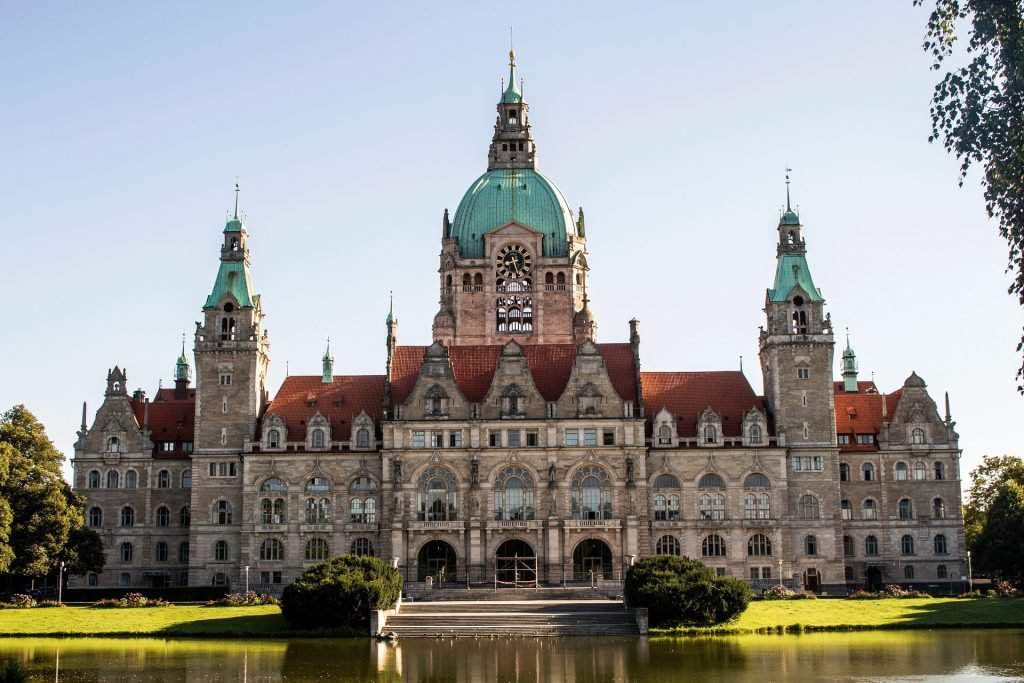
    City Hall, Hannover, Germany

    Wizz Air is also launching flights from Budapest to the Balkan region. Tirana, Sarajevo, Skopje, and Podgorica will be available from the Hungarian capital.

    The Spanish Iberia airline is launching a flight between Madrid-Barajas and Budapest, starting April 1. The flight will be available three times a week until July, four times a week in July, and on a daily basis in August. The flight is part of the airline's summer schedule, available until October 28.

    Budapest Airport wins fourth Skytrax Award in a row

    The Czech Airlines is re-launching a direct flight between Prague and Hévíz-Balaton Airport. The flight is available once a week from April until the end of October.


    Due to great interest, Air Canada Rogue is launching their sixth flight between Toronto and Budapest this summer. Starting May 20, the airline provides flight between the two cities three times a week, on Tuesday, Thursday and Saturday. In the summer season, between June 21 and September 19, flights will be available every day of the week except Monday.

    Cover photo: Bergen, Norway by Wikimedia Commons/Svein-Magne Tunli

    Ce: bm

    Source: profitline.hu

    Related Posts
  • New summer schedule of the Budapest air transport

    Air transportation has began working according to the summer schedule as turning our clocks forward happened on Sunday, March 27 (from 2:00 to 3:00). According to turizmusonline.hu, Budapest Airport calls…


  • Source: New European destinations available from Budapest Airport

    Tuesday, April 4, 2017

    Top 7 Destinations in Germany for North American Self-Drive Tourists

    PORTLAND, Maine, April 4, 2017 /PRNewswire/ -- Auto Europe, one of the industry's first global car rental companies, reveals the top 7 destinations in Germany for North American tourists exploring by car. Destinations are based on the pickup location of reservations from late 2016 and early 2017 in combination with a review of global travel data.

    #7 Nuremberg The city is known for malty red-beer and a maze of sandstone cellars, Nuremberg's now revived urban center is perfectly situated between Frankfurt & Munich, making it an easily accessible driving destination.

    # 6 Stuttgart Stuttgart is a top-notch European city filled with amazing architecture, culture, dining, and art. It's also home to the Cannstatter Volksfest an ideal spot to enjoy traditional German Oktoberfest celebrations with less tourist traffic.

    # 5 Hamburg This charming port town and Germany's second largest city, Hamburg offers travelers much to do & see and its location makes it the perfect launching off point for a European road trip.

    #4 Dusseldorf Recognized as the center of German advertising and fashion, Dusseldorf has a lively energy that offers an exciting nightlife, fun carnivals, shopping, and trade fairs. From Dusseldorf, travelers can easily drive to explore Belgium and the Netherlands as well as other locations along the Rhine River.

    #3 Berlin A global city of politics, media, culture and science, Berlin is home to some of the world's most fascinating historic attractions, culturally significant monuments, and modern amenities.

    #2 Frankfurt Located along Germany's acclaimed Fairy Tale Road, Wine Route and one of the oldest touring roads in the world the Ro mantic Road, it's no surprise North American travelers choose Frankfurt as a top self-drive destination!

    #1 Munich The gateway to some of the most stunning landscape in the world, the Bavarian capital of Munich is host to the world's largest Oktoberfest. The self-drive adventures are virtually limitless from Munich on a journey through the awe-inspiring Bavarian Alps, or to the area's storybook villages & castles are all within an easy days drive.

    "Germany has always been one of the top destinations for our clients," said Imad Khalidi, CEO of Auto Europe. "It is a welcoming country with rich history and beautiful castles that are easy to explore by car."

    About Auto Europe With over 60 years of experience in the rental car industry, Auto E urope specializes in helping travelers find the best car rental rates in Europe and other popular destinations around the world. Auto Europe's deep understanding of the complexities of renting cars abroad paired with their knowledgeable team of rental specialists (available 24/7) allows Auto Europe to provide travelers with the highest quality service in the industry before, during and after their rental. To find the best rate on a car rental for your next trip abroad or to learn more about renting a car in Europe visit www.autoeurope.com. 

    Media Contact:Meghan Donovan207-842-2038153343@email4pr.com

    To view the original version on PR Newswire, visit:http://www.prnewswire.com/news-releases/top-7-destinations-in-germany-for-north-american-self-drive-tourists-300433988.html


    Source: Top 7 Destinations in Germany for North American Self-Drive Tourists

    Monday, April 3, 2017

    Where to Go in the Canary Islands: A Guide to the Top Destinations

    Just-about-perfect weather and staggeringly diverse scenery -- from spectacular Saharan-sand beaches to snowy volcanic peaks -- make the Canary Islands a delight for lovers of the outdoors. Since the 1960s, the seven Spanish-governed islands have been a major travel destination predominantly for Europeans, and recently, their already-infinite appeal has soared due to Europe's shaky geopolitical climate. Travelers who might have vacationed in Turkey or Egypt a year or two ago are now opting for a trip to this balmy archipelago instead. (Spain's Balearic Islands have also seen an increase in bookings for this same reason, though some argue that the Balearics have not absorbed their newly inflated tourist numbers as well as the Canaries, which have a solid tourism infrastructure, including sound roads, airports, ferries and ports, bus systems, car rentals, and hundreds upon hundreds of hotels for every budget.) 

    What's more, dangerous wildlife and weather are practically unknown in this part of the world. There are no native predators or insects -- not even mosquitoes -- and the air is healthy, clean, and high-quality. The seven islands are paradise for adventurous types and water-sports enthusiasts. Incredible beaches and hiking are a certainty, and pursuits like kayaking, catamaran cruises, paragliding, surfing, diving, snorkeling, and kite-surfing are popular across the Canaries. 

    So which Canary Island is for you? The seven islands have quite a bit in common -- they all feature pleasing temps, little annual rainfall, and world-class water-sports conditions. But they are vastly, wildly different. Here, we hone in on some of the islands' key distinctions.

    What you'll find: Tenerife is the largest, most populated, and most visited of the Canary Islands, with five million annual tourists joining the roughly one million full-time inhabitants. A huge concentration of Tenerife's visitors stay in -- or at least pass through -- Playa de las Americas, a tourist-ready beach resort in the island's southwestern corner. (Tenerife's climate varies drastically. The south is warmer, drier, and sunnier than the cool, forested north.) Towering, tacky oceanfront resorts line Playa de las Americas' man-made beaches, which are packed with people playing volleyball, camping out under palapa umbrellas, basking on the jetty rocks, and suiting up to surf. Breakwaters keep the waters calm, making the beaches popular with families. An epic paved beach promenade runs for miles, from Los Cristianos in the south to Costa Adeje in the north, and is filled with a seemingly never-ending chain of open-air bars, souvenir shops, fish spas, excursion kiosks, and caf es catering almost exclusively to British tastes. (Nearly all of the restaurants along the beach walk would be completely forgettable, were it not for their magnificent ocean and sunset views.) Travelers who venture off the beaten track will be greatly rewarded with beautifully preserved villages and volcanic hiking trails.

    Do not miss: There is more to Tenerife than just rampant development. Teide National Park, far above the tree line, is home to one of the largest craters on the planet as well as Spain's highest point -- Mount Teide -- which can be reached by way of a thrilling cable-car ride. Teide is the largest of the Canary Islands' four national parks, and offers amazing hiking. Hell's Canyon and Roque del Conde in the south are popular hiking areas. Serious trekkers should go for the strenuous trails around Masca, in the northwest.

    Where to stay: For the prototypical Playa de las Americas experience, try a beachfront all-inclusive, like H10 Conquistador, or a self-catering complex, like Aparthotel Parque de la Paz. 

    La Gomera Photo courtesy of Jennifer Smith via Flickr

    Photo courtesy of Jennifer Smith via Flickr

    What you'll find: Though it's just a 50-minute ferry ride from Tenerife, La Gomera feels worlds away. The shamelessly touristy stretches found across the channel and on other Canary Islands' tourist meccas are happily absent here. The second-smallest of the Canaries, La Gomera is covered in a dense, enchanting laurel forest filled with leafy banana trees, vining greenery, tropical flowers, and mossy rock formations. The lush landscape, especially in the mist-shrouded Garajonay National Park, stands in stark contrast to the arid topography of Teide and southern Tenerife. La Gomera's sloping terrain is intersected every which way with walking trails, making it a wonderland for walkers. 

    Do not miss: Exercising your sea legs is also essential here. Around 300 pilot whales live permanently in the waters between Tenerife and La Gomera (as do dolphins, sea turtles, orcas, bluefin tuna, and swordfish), so a whale-watching boat tour is an absolute must.

    Where to stay: The clifftop Hotel Jardin Tecina delivers sublime views of the Atlantic Ocean from its perch above Playa de Santiago.

    What you'll find: In geographic terms, Gran Canaria pretty much has it all: craggy mountains, Sahara-like deserts, primitive forests, lush canyons covered in wild olive and almond trees, and the glorious, golden-sand beaches for which the archipelago is known. In fact, Gran Canaria is often called a "continent in miniature" due to its dozens of microclimates and remarkable range of terrains. (No wonder the entire island is a World Biosphere Reserve.) Gran Canaria is the perfect destination for travelers who want to see a lot, but its marvels aren't just of the natural variety. The island is also a cultural knock-out, harboring quiet, 16th-century villages, ancient cave sites, and a food scene that's more exciting than what's found on other Canaries. The stunning desert landscape of the Maspalomas Dunes sweeps down to the Atlantic, culminating in long, sandy Maspalomas Beach, where a boardwalk offers restaurant and bar after restaurant and bar. The wide swath of sand dunes makes f or amazing photographs (and draws plenty of nudist sunbathers). Nearby Playa del Ingles is known for its sandy, nightlife-laden beaches. Gran Canaria and Tenerife both offer a seemingly unending parade of purpose-built mega-resorts as well as celebrated golf courses and kid-friendly water parks (Aqualand here, Siam Park in Tenerife).

    Do not miss: The Canary Islands' archeological heritage is evident throughout the archipelago, but Gran Canaria's Painted Cave museum, in the northwestern town of Galdar, offers a taste of the island's indigenous culture. 

    Where to stay: Located on a cliff overlooking the beautiful Amadores beach, the sprawling Gloria Palace Royal Hotel & Spa is idyllic. It also has beach access and ocean-facing balconies in all rooms.

    What you'll find: All Canary Islands have incredible coastlines, but the big sand-dune and black volcanic beaches of Fuerteventura are arguably the most impressive on the archipelago. The island's shore is perfect for surfing, wind-surfing, and kiteboarding (especially in the northwestern part of the island), and outfitters for diving and water-sports excursions are seemingly around every corner in the laid-back beach towns. Moving inward from the coast, Fuerteventura has desert plains that surround a tropical, mountainous core. It's also the second-largest island in the chain, and a UNESCO Biosphere Reserve.

    Do not miss: Off of the northern tip of the island lies Isla de Lobos, one of Fuerteventura's best surfing sites. For the less aquatically inclined, the nature preserve has plenty of beautiful walking trails, including a vertigo-inducing caldera walk.

    Where to stay: For travelers that want to be close to everything, Avanti Hotel Boutique Fuerteventura's location can't be beat. It's just a block off the commercial main street in the center of Corralejo, which boasts loads of restaurants, bars, shops, nightclubs, and other diversions.

    Photo courtesy of salomon10 via Flickr

    Photo courtesy of salomon10 via Flickr

    What you'll find: Lanzarote is truly unlike anywhere else on this planet. The easternmost Canary Island is a curious realm of lava fields, green lagoons, and intense teal sea. "Out of this world," "lunar," and "martian" are often uttered when visitors describe Lanzarote's dramatic lavascape. Hiking through Timanfaya National Park is non-negotiable, but to counter all of that hot, reddish, windswept earth, your itinerary should leave plenty of time for exploring local fishing villages and relaxing on cliff-framed crescent beaches. The famous beaches of Costa Papagayo are especially beautiful, and are renowned for their kitesurfing. Most of the Canaries have excellent surfing, but Lanzarote has the very best conditions for it. The buzzing tourist town of Costa Teguise resembles Playa de las Americas in that it has little true Canarian spirit, but it does feature the golden-sand Las Cucharas Beach, a seafront promenade, and the lively Plaza Pueblo Marinero -- a square with a quaint s election of Spanish restaurants, cafes, bars, and evening market stalls.

    Do not miss: For a better sense of traditional Lanzarote life, venture inland to Teguise, which was founded in the 15th century. There, Castillo de Santa Barbara holds court high above the Lanzarote countryside. The historic castle was built -- on a volcano, naturally -- to protect Teguise from pirates.

    Where to stay: Located in the beach town of Puerto del Carmen, the adult-only Lani's Suites de Luxe stands out for its polished design, top-notch services, and thorough attention to detail. Many of its sleek, high-end rooms have private outdoor whirlpools, and all have terraces and ocean views.

    La Palma Photo courtesy of Benjt Nyman via Flickr

    Photo courtesy of Benjt Nyman via Flickr

    What you'll find: Travelers willing to swap crowded yellow-sand beaches (as well as rasping tour-operator buses and '70s-era cookie-cutter all-inclusive resorts) for immaculate natural beauty would do well in rugged, remote La Palma. Sightseers can spend their days quietly trekking across lava fields in the interior and south of the island (an afternoon in Caldera de Taburiente National Park is obligatory). In the north, you'll find waterfall-laced laurel forests so green that even the lush woodland of La Gomera seems infertile in comparison. Nights are for stargazing, a welcome change of pace from the after-dark pastimes of nightclubs and beach bars on other islands. Like Fuerteventura, La Palma is a UNESCO Biosphere Reserve. 

    Do not miss: High above the clouds, on the summit of Roque de los Muchachos, sits one of the biggest telescopes on the planet. Reservations are strongly encouraged. UNESCO named La Palma the world's first Starlight Reserve in 2012, meaning that its exceptionally clear skies (and distant position in the Atlantic Ocean) are ideal for spotting constellations and other astral wonders. 

    Where to stay: Teleport back to 17th-century La Palma at Hotel Hacienda de Abajo, a 32-room hotel that was originally built as the private residence for a noble family.

    El Hierro Photo courtesy of Victor R. Ruiz via Flickr

    Photo courtesy of Victor R. Ruiz via Flickr

    What you'll find: "The Island at the End of the World," El Hierro holds many Canary Islands superlatives. It is the smallest, the least populated, and the farthest away (it is the westernmost and southernmost of the Canarian landmasses). And for nature lovers, it is perhaps the most seductive of the islands. The UNESCO geopark (El Hierro is the only Canary Island with this designation) is a tiny, wild world of wonderful walking paths, giant lizards, soaring pines, and fields blanketed with wildflowers. The shoreline is mostly rocky, ragged cliffs and pebble beaches; these aren't great for swimming, but the waters around La Restinga provide some of the very best scuba-diving and snorkeling in the archipelago. Like La Gomera and La Palma, El Hierro is blissfully free of the commercialism that has swept many parts of the Canaries.

    Do not miss: Even if you tried, you couldn't miss the massive crater, which was the result of a giant landslide thousands of years ago. The majestic El Golfo commands the entire northwestern edge of boomerang-shaped El Hierro. Hiking through the valley provides up-close looks at wind-whipped juniper trees (called sabina trees here) and spine-chilling views of the Atlantic Ocean.

    Where to stay: Burrowed between giant cliffs and the sea, Parador Hotel El Hierro is a government-run hotel with a stunning location on the eastern coast of El Hierro.

    You'll Also Like:


    Source: Where to Go in the Canary Islands: A Guide to the Top Destinations

    Sunday, April 2, 2017

    'Endangered species to declare?' Europe's understudied bushmeat trade

    (MENAFN - Asia Times) Switzerland is home to CITES, the Convention on International Trade in Endangered Species of Wild Fauna and Flora. But that doesn't mean it is immune from wildlife trafficking, or that some of its citizens haven't developed a taste for bushmeat.

    'I've checked in on flights in Cameroon, which are going straight to Switzerland. I've been in line with people in front of me who have had big cool boxes in front of them, and they have checked them in without any problems,' says Karl Amman, who is credited with first exposing the bushmeat trade in the 1990s and who continues studying the problem.

    An estimated 40 tons of bushmeat is flown into Geneva and Zurich airports every year, with a similar story likely unfolding in other European capitals, where poached, wild caught meat – including endangered species – is illegally being traded and served on urban dinner plates. The problem could be serious, and some trafficking could be well organized, but only a few surveys in a couple of countries have been done so far to determine what's happening at European points of entry.

    The DailyBrief Must-reads from across Asia - directly to your inbox

    While most of the wildlife trade occurring around the world remains in-country – whether in Africa, Southeast Asia or the Americas – experts are absolutely certain that bushmeat is finding its way to Europe's biggest cities, where demand for exotic delicacies or a 'taste of home' drives a trade which has yet to be quantified. Among the endangered species being served as bushmeat in Europe may be endangered great apes, though no one knows how many and how often.

    Know your bushmeat species

    To the untrained eye, bushmeat — particularly when chopped up and smoked — is unrecognizable as to its species of origin. Herein lies the key problem regarding customs enforcement, with already harried officials facing a long list of perceived threats ranging from terrorists to illegal immigrants, and likely untrained in bushmeat species identification — no less, spotting the meat of endangered species.

    As a result, the charred remains being transported into Europe that are sometimes confiscated are often at best categorized as 'bushmeat' or 'wildmeat,' or more typically just as 'products of animal origin' (which includes domestic meat or fish).

    This lack of data makes the work of researchers like Nolle Kmpel of the Zoological Society of London (ZSL) and chair of the UK Bushmeat Working Group, all the more difficult. 'In the UK, [the Department for Environment, Food and Rural Affairs] publishes annual reports of confiscations of products of animal origin,' she told mongabay.com. But there is no specific account of bushmeat quantities.

    Another problem: due to the potential health hazards posed by the inadequate handling of poorly slaughtered meat, confiscated bushmeat is often disposed of or incinerated immediately, without species documentation.

    That is not to say that bushmeat does not carry health risks, as slaughtered meat has been linked to a wide range of diseases, including HIV, Marberg, and E.coli. It has been suggested that the UK's foot and mouth epidemic at the beginning of the last decade originated with bushmeat imports. It is also suspected that the 2013 outbreak of Ebola in West Africa was spread via the consumption of infected fruit bats.

    In the wake of these epidemics, there have been fears that illegally imported bushmeat could be a gateway for such viruses to enter European cities.

    In March 2015, Kmpel and her colleagues released a review entitled Bushmeat and Ebola: Myth and Reality,in an attempt to clarify some of the confusion regarding claims that the bushmeat trade was behind the 2013 Ebola outbreak and could cause a global pandemic.

    Ebola can be active in untreated bushmeat for only up to three to four days, the researchers wrote, and given that much of the trafficked meat is smoked, the chances of the virus surviving the journey to Europe or the US is low. 'The risk of spread to new areas lies with the movement of infected people, not infected meat.'

    Still, the potential threat of disease is why bushmeat is rarely stored for analysis — unlike ivory, rhino horn, great ape skulls or other identifiable wildlife parts. The fear of infectious disease being transmitted via bushmeat to humans and/or livestock, and the resulting rapid destruction of trafficked meat, continues to hamper scientific evaluation of European trafficking patterns.

    Even when bushmeat specimens are preserved for examination, experts can still miss the mark. 'We call ourselves bushmeat specialists, and we believe we can recognize it. But many times we were wrong,' Bruno Tenger says of past analyses. He is part of the Tengwood Organization and a member of the team that studied bushmeat entry in Switzerland. DNA analysis is the only sure way to identify the species of origin with certainty.

    'So really that DNA step is critical,' Tenger's research partner Kathy Wood adds. This is not, however, a test currently being conducted on bushmeat seizures at international airports and at other points of entry.

    A blue duiker widely consumed as bushmeat, is listed on CITES, meaning that trade is controlled. Blue duikers and rodents made up 75% of carcasses found in the Paris airport study. Photo: Flickr/Derek Keats (Creative Commons) Europe as destination for the bushmeat trade

    Although authorities have long known that bushmeat is turning up on European plates, one of the first significant insights into the trade occurred only eight years ago in Paris.

    Researchers from ZSL and Toulouse's cole Nationale Vtrinaire and Musum d'Histoire Naturelle surveyed bushmeat confiscated at Charles de Gaulle airport on flights arriving from Africa. Over a period of 17 days, a total of 134 passengers were searched; nine were found to be carrying a total of 188kg of bushmeat.

    Extrapolating the figures, the researchers say around 270 tons could pass through this one airport every year.

    Multiplying these totals by all of Europe's major airports, the scale of trafficking came as a big shock to researchers. 'People knew that bushmeat was being traded, but they didn't know to what extent,' said Anne-Lise Chaber, who led the research.

    Chaber notes that the team studied Charles de Gaulle in part because of other airports' unwillingness to open their doors to scrutiny. 'I'm sure that if we were to conduct the study in other capitals, we would find a similar trend… most of the big cities are likely to be impacted by the bushmeat trade.'

    Four years later this hypothesis was given greater credence in Switzerland.

    Tenger and Wood of the Tengwood Organization studied bushmeat arriving at Geneva and Zurich airports. The 40 tons per year that they believe is being smuggled into the country may not sound like a large number, in comparison to the thousands of tons poached for local and urban consumption in African states, but for the researchers it came as a shock.

    The scientists believe their study was only likely green-lighted because customs authorities assumed there was nothing, or very little, to find. 'They thought they had a very small problem. The surprising things were, first of all, that [bushmeat] was coming in, and in some volume,' Wood told Mongabay.

    The Swiss study added new detail to the trade: DNA analysis was used to pinpoint exactly which species were being trafficked. One-third of the meat was found to be from threatened CITES species including pangolins, small carnivores and primates. Three species of guenon (African monkeys) were found, all being trafficked from Cameroon.

    'If it's coming into Switzerland, which is a tiny country and the seat of CITES, then it's obviously coming into lots of other places,' Wood concludes.

    To raise awareness of the bushmeat issue, the Tengwood Organization collaborated with the Swiss Federal Food Safety and Veterinary authority to produce a brochure featuring graphic images of charred bushmeat to help customs officials identify trafficked species.

    According to the Swiss CITES biannual report covering 2013-14, seven confiscations of identified bushmeat weighing a total of 83.3kg took place over that period, with 8,500 Swiss francs (US8,431) in fines handed out.

    The steepest penalty, totalling 3,000 Swiss Francs was charged for the smuggling of 30kg of bushmeat, which encompassed a wide range of species such as near threatened bay duikers (Cephalophus dorsalis), the African brush tailed porcupine (Atherurus africanus), and endangered pangolins.

    'Switzerland faces the same challenges as any other country: it is not possible to have a control that covers every incoming passenger, and therefore there will always be imports that go undetected,' says Lisa Bradbury, a scientist with the Swiss CITES Management Authority. 'The study has not had any direct impact on [confiscations] within Switzerland that we could measure or quantify.'

    The Swiss study and the brochure have, however, 'hopefully' assisted customs officers along with CITES officials to identify which species are CITES listed and so warrant a fine. Non-CITES species trafficked as bushmeat are destroyed with no further action taken, Bradbury reports.

    Whether great apes are coming into Europe or not as bushmeat in any amount, is difficult to say without significantly more research. But 'whether it's a great ape or other primates, it's still a real concern; many, many primates are on the IUCN Red List,' says Michael Bruford, a molecular ecologist at Cardiff University.

    He urges the regular use of inexpensive DNA analysis at points of entry to gather data.

    A captive chimpanzee. Great apes are believed to be targeted for the bushmeat trade. Photo: Rhett A. Butler Great apes on the menu, or an urban myth?

    Great ape meat is making the journey across the world's oceans to Europe too – though the seriousness and scope of this trafficking is largely unknown with little recent data. In a 2006 study 27 gorilla and chimpanzee parts were recorded in bushmeat markets in cities in North America and Western Europe.

    There are stories told of great ape bushmeat being found in New York and Toronto; and claims that it's also been sold in Paris, Brussels, and even in the English midlands. But researchers haven't quantified how much is being trafficked and what proportion of the bushmeat trade it constitutes – if any at all.

    This lack of knowledge isn't a reason to feel reassured, but is rather a cause for concern. Research is needed to see whether rumors are the only thing being spread, or whether great ape bushmeat is flowing into European markets.

    In Africa itself, great apes make up just a sliver of the entire bushmeat trade. But while apes are not usually targeted by hunters, poaching is still cited as one of the main drivers of their decline.

    Other endangered species are eaten in far greater quantities, but even a few great apes poachd can pose great risk to these highly threatened species: Last year the Eastern Lowland gorilla, also known as Grauer's gorilla (Gorilla beringei graueri) was classified as critically endangered by the IUCN, and it is thought as few as 5,000 remain in the wild.

    Three other great apes, the Western Lowland gorilla (Gorilla gorilla gorilla), Bornean Orangutan (Pongo pygmaeus) and Sumatran orangutan (Pongo abelii) are also listed as critically endangered; chimpanzees (Pan troglodytes) and bonobos (Pan paniscus), meanwhile, are listed as endangered, with their numbers dwindling year on year.

    During his career, Tom de Meulenaer, Chief of Science at the CITES Secretariat in Geneva, has heard many rumors of ape meat being available in European cities. He says that the scarcity of evidence suggests the trade is likely little more than an urban myth.

    'We would hear about it,' he asserts. 'It's like with rhinos, you hear about it, and there are confiscations. In the case of primates, it's extremely rare that any consumption is reported taking place outside of Africa.'

    However, not all bushmeat researchers agree with this view: Chaber points out that her study was quite small in scale and scope, and just because it did not identify any great ape bushmeat, does not mean the primates are not being trafficked.

    Tenger notes that, because customs officials are not analyzing seized meat, it is very possible that great apes are among the smuggled bushmeat: 'You don't even know what you have, you could be throwing out a piece of great ape and you wouldn't even know that it happened.'

    'There is no serious effort to identify the smoked meat that comes to Europe from central Africa. It can be from any animal… That is the reality,' de Meulenaer concedes.

    The need for certainty A pangolin about to be turned into bushmeat in Cameroon. Photo: Eric Freyssinge (Creative Commons Attribution-Share Alike 4.0)The need for certainty

    In light of this lack of data, researchers are urging much more DNA sampling. And according to Michael Bruford, a molecular ecologist at Cardiff University, DNA analysis of smoked bushmeat could be pretty easily accomplished at national points of entry.

    In a 2011 study conducted in Guinea-Bissau, Bruford and a team of researchers used DNA barcoding to identify species from various lumps of charred meat available at local markets. They were looking for evidence of great ape consumption, but found instead that vendors were regularly misidentifying the meat they were selling.

    They discovered that warthog meat was being sold as baboon – one of the most expensive meats in Guinea-Bissau – and also that Campbell's mona monkey (Cercopithecus campebelli), an IUCN species of least concern, was the second most-traded species, contrary to local belief.

    Bruford says it's a pity that such a DNA sampling tool isn't used more widely, especially with international customs, as it's cheap and simple to use. He believes that its implementation could help to both identify bushmeat species and narrow down the country of origin, potentially facilitating prosecutions, similar to the Rhino DNA Indexing System used to catch rhino poachers.

    Despite being available since 2009, he says that wider use of this technology 'has never really come onto the radar' of border inspection agents, likely because the identification of bushmeat is far from being a top priority.

    As to whether great apes would be found coming into Europe or not, Bruford can't say, but he argues that 'whether it's a great ape or other primates, it's still a real concern; many, many primates are on the IUCN Red List.'

    'Taste of home' or organized crime?

    One important question still largely unanswered is whether the global bushmeat trade is primarily conducted by individuals, or is part of larger underworld criminal trafficking networks.

    In the 1990s, diplomatic couriers were known to be traveling from Africa to Europe with bags packed with bushmeat, according to de Meulenaer. He believes that these sophisticated trafficking rings no longer exist, but admits the numbers gleaned from the few available studies speak for themselves: 'Bushmeat doesn't come in by itself,' he says. 'There must be some regular back and forth. Otherwise you don't bring in these quantities of meat.'

    It is known that some Africans traveling between their home states and new residences in Europe, do bring back a little meat, in much the same way that a Frenchman traveling to a new home in New York might stuff a bag with a few wheels of premium French cheese. This practice, known as bringing back a 'taste of home' is common among West Africans, where bushmeat has a long tradition.

    Importantly, this practice doesn't necessarily involve the trafficking of endangered species; cane rats are commonly consumed in West Africa, and are often found in bushmeat confiscations. In 2013, rodents made up half of 543 bushmeat confiscations in a US study.

    African brush-tailed porcupine (Atherurus africanus) being sold for meat in Cameroon's East Province. This species was detected among confiscated bushmeat coming into Europe. Photo by Anonymous. Permission is granted to copy, distribute and/or modify this document under the terms of the GNU Free Documentation License, Version 1.2

    However, other people travel with nothing but bushmeat packed into their bags, suggesting that the meat is being trafficked simply to be sold to market dealers. Smuggling profits can be lucrative. A 4kg monkey can cost around 100 (or around US105) in Paris, compared to 5 for the same (around US5.37) meat in Cameroon.

    Amman states that this trade is 'specialized,' and run by people who are aware of where enforcement is strictest. He notes that unlike other wildlife products, such as ivory or rhino horn, which have limited trade routes, 'bushmeat is distributed wherever you go.' In Europe this may be wherever there are migrant populations of Africans. To what extent the trade may also extend to gourmet or delicacy markets is unknown, as is the involvement of organized crime in transport.

    The tip of the iceberg

    What is known with some certainty is that Europe's struggle with an influx of bushmeat is small compared to the far greater crisis unfolding in Africa.

    'One thing we are all concerned about is the massive impact of bushmeat markets in Central Africa and Western Africa,' de Meulenaer says. 'There are estimates that the annual harvest of wild animals is six times what the forest can sustain. Actually, Africa is eating its forests and we are looking at empty forest syndrome – like what we have in Southeast Asia – in a very short time.'

    'There is very little that is being done' to staunch this escalating crisis, he warns.

    The European bushmeat market does play an important role, however. It represents a lucrative end point for African traffickers, and it is a place where they can get high prices for increasingly rare African species, making transport of illegal meat worth the potential risks, which appear to be minimal at present due to lax enforcement. This could mean that as African species get rarer still, and fetch a higher price abroad, Europe and the US could turn into burgeoning bushmeat markets.

    As de Meulenaer points out, the 'entire subsistence aspect of the bushmeat trade has changed.' Whereas many remote local people still rely upon bushmeat for their daily protein intake and livelihood, there is also a thriving market for endangered species concentrated in African cities.

    'It's become an industry to supply the market, the megacities that are the capitals of these countries.' And it's only a small step for traders to seek the bigger profits to be made by trafficking across the Mediterranean.

    In light of this potential threat, researchers urge that important questions be resolved soon regarding Europe's role in the international bushmeat trade.

    Regulators and law enforcement need to know: how much meat is being trafficked? Is great ape bushmeat being smuggled along with numerous endangered, and non-endangered, species? If so, in what quantities? And are the amounts of meat being transported increasing?

    Kmpel urges that research be done to quantify the scale of the problem, then create mechanisms to monitor the trade. The former must happen before enforcement measures can be applied, she says. 'At the moment we just have the confiscation data, and it doesn't single out bushmeat [by species], so we can't see whether this is an increasing or decreasing problem,' she says.

    Until the quantity of bushmeat being trafficked into Europe is accurately known, and what species are being traded, the threat to endangered species, including primates, will remain a mystery.

    You are what you eat

    Experts say that still another piece in this complex trade puzzle needs to be examined: consumers.

    Analysis of bushmeat eating habits and trends in African immigrant communities in Europe is essential for developing an understanding of the trade, the health risks involved, and the conservation issues that arise from it. At the moment there is 'very little' of this kind of data, or engagement with migrant communities to get it, according to de Meulenaer.

    When looking at Africa-to-Europe trafficking, it is important not to demonize the trade, Kmpel cautions, noting that headlines denouncing those who eat rats or monkeys are not helpful, they provoke horror in some people because 'we are more detached from those traditional lifestyles' in the West. 'I have no problem with hunting and consumption and the trade of bushmeat, the concern is where there are conservation and health risks to it,' she concludes.

    While charismatic species such as elephants and rhinos remain at the forefront of the battle against wildlife trafficking, beyond the ivory tusks, tiger bones and leopard skins may lie a potentially large international trade in exotic meat from threatened species which could be steady, or may be increasing — we just don't know.

    It may also turn out to be a traffic predominantly made up by less threatened species, but such a trade may not be sustainable, and potentially devastating in the long term.

    That's why enhanced, and ongoing, monitoring is needed now at points of entry to discover just how much bushmeat is coming into Europe, what species are being trafficked, and whether trends are going up or down. What we find may be shocking, but no matter what, thorough study will provide vital actionable data.

    Mongabay seeks to raise interest in and appreciation of nature and wildlife, while examining the impact of emerging trends in climate, technology, economics, and finance on conservation and development.

    This article was originally published on Mongabay. Read the original article here

    Share Tweet Linkedin Email Culture Nature Endangered Animals Mongabay

    MENAFN0104201701590000ID1095359934


    Source: 'Endangered species to declare?' Europe's understudied bushmeat trade

    Saturday, April 1, 2017

    Europe: Combating Fake News

    Europe: Combating Fake News https://www.gatestoneinstitute.org/10037/no-go-zones-europe by FjordmanApril 1, 2017 at 5:00 am https://www.gatestoneinstitute.org/10037/no-go-zones-europe Send Comment
  • If present demographic trends continue, in a few decades, native Swedes could easily become a minority in their own country.
  • Swedish ambulance personnel want gas masks and bulletproof vests to protect their staff against the escalating attacks, similar to equipment used by staff working in war zones.
  • Most dangerous, however, is our inability to deal forcefully with problems undermining Western societies, because some Western media refuse to admit that the problems exist.
  • In January 2015 The New York Times denied that there are "no-go-zones" -- areas that are not under the control of the state and are ruled according to sharia law -- dominated by certain immigrant groups in some urban areas in Western Europe. The American newspaper mentioned this author, alongside writers such as Steven Emerson and Daniel Pipes, for spreading this alleged falsehood. The article was published shortly after Islamic terrorists had massacred the staff of the satirical magazine Charlie Hebdo in Paris on January 7, 2015. Other established media outlets such as the magazine The Atlantic also dismissed claims of no-go-zones. Fox News issued an unusual on-air apology for allowing its anchors and guests to repeat the suggestion that there are Muslim "no-go zones" in European countries such as Britain and France. Regarding the subject of "no-go-zones," this is largely a question of semantics. If you say that there are some areas where even the police are afraid to go, where the country's normal, secular laws barely apply, then it is indisputable that such areas now exist in several Western European countries. France is one of the hardest hit: it has a large population of Arab and African immigrants, including millions of Muslims. I have been writing about the problems in Sweden and the rest of Europe for many years. The problems are unfortunately all too real. Here are a few facts: Sweden surpassed ten million inhabitants in early 2017. The recent population growth is almost entirely due to mass immigration. If present demographic trends continue, in a few decades native Swedes could easily become a minority in their own country. The economist Tino Sanandaji suggests that this transformation could happen within the coming generation. Statistics from January 2017 indicate that for people born in Sweden, the unemployment rate is 4.3%. Yet for people born abroad, the unemployment rate is a staggering five times higher, at 22.1%. This constitutes a huge economic and social burden for the taxpayers. The famous Swedish welfare state has been quietly cut back for many years. In an essay published in February 2016, Stockholm police inspector Lars Alvarsjö warned that the Swedish legal system is close to collapse. The influx of asylum seekers and ethnic gangs has overwhelmed the country and its understaffed police force. In many suburbs, criminal gangs have taken control and determine the rules. The police, fire brigades and ambulance personnel in these areas are routinely met with violent attacks.Malmö, Sweden's third-largest city, houses over 300,000 people, as of 2017. Despite its modest size, the town has a crime rate equal to that of vastly larger cities. The local police are barely able to investigate murders. Less serious crimes often go unpunished. Malmö probably has the highest percentage of Muslim immigrants of any city in Scandinavia. The most Islamic city in Scandinavia also happens to be the most criminal and the most violent. In November 2016, Malmö's chief prosecutor Ola Sjöstrand publicly admitted that his office was approaching a total collapse in terms of criminal investigations. "If people are hit by crimes which then aren't investigated, they will lose faith in the rule of law," Sjöstrand told the regional newspaper Sydsvenskan. During New Year's Eve celebrations at the beginning of 2017, parts of central Malmö resembled a war zone. Young immigrants shouted "Jihad!" while throwing fireworks at people. Swedish teenagers gathered in a large group to avoid being robbed. A janitor in Malmö was shot and sustained life-threatening injures while clearing snow in February 2017. Police detained several suspects, understood to be linked to gang violence, for questioning. A 15-year-old boy was arrested on suspicion of attempted murder. Meanwhile, officials at a local electrical firm announced that they would no longer expose their staff to risk by taking jobs in Malmö; there is just too much violent crime in the city. Beginning in March 2017, the emergency ward at the hospital in Malmö will lock the doors at night. This is a security precaution that became necessary due to repeated violent threats from certain gangs or clans against patients and staff. In July 2015, the police in Malmö asked for assistance from the national police to stop the wave of violence. Apparently, even that response was not enough. In January 2017, the police chief, Stefan Sintéus, publicly appealed to residents in Malmö for help in containing violent crime and deadly gang shootings: "Help us to tackle the problems. Cooperate with us."Peter Springare, a police officer in the town of Örebro in central Sweden, finally vented his frustration in February 2017. Migrants are to blame for the vast majority of serious crime in Sweden, causing the police force to become overloaded, he wrote on Facebook. When dealing with drug crimes, rapes, robberies, aggravated assaults, murders, extortion or violence against the police, the suspected perpetrators very often have names such as Ali, Mahmoud or Mohammed. They usually have a family background from Iraq, Turkey, Syria, Afghanistan or Somalia. Others do not have valid papers. Gothenburg, Sweden's second largest city, has been for several years one of the most important recruitment centers in Europe for jihadists seeking to join the terrorist group Islamic State in Iraq and Syria (ISIS). A survey carried out in 2016 showed that about one in nine school students aged 12-18 in certain Gothenburg suburbs openly expressed sympathy with militant Islamic groups. Nordstan in Gothenburg is one of the largest shopping malls in Sweden, located in the heart of the city. 3,250 crimes were reported to the police from Nordstan in 2016. That number is from a single shopping mall in one year. Aggressive groups of Muslim immigrants, especially young men from North Africa, Syria or Afghanistan, partly dominate the mall. "I've had people in front of me that look like they are 35, but who claim to be 15. I can't prove they're lying so we have to release them," Rikard Sörensen from the police said. Stockholm suburbs such as Husby, Rinkeby and Tensta house large concentrations of recent immigrants. These districts are riddled with crime, violence and social problems. The Swedish police have repeatedly been attacked by criminal gangs there, even with hand grenades. One day in December 2016, shopkeepers in Husby closed their stores as a protest. Salam Kurda is the chair of the local shopkeepers' association. He says he has had enough after his shop was burgled. Politicians and the police have abandoned Husby to the criminals, states Kurda, who plans to give up his shop. He says it is not profitable and he doesn't feel safe. In December 2016, the American Jewish documentary filmmaker Ami Horowitz told the story of his venture into Husby. A few seconds after they arrived, five men approached them. They said "You guys gotta get out of here right now." The film crew, being Swedish, turned around and ran for it. Horowitz decided to stay and try to figure this thing out with the men. The five men then immediately attacked Horowitz, punching, choking and kicking him. Nobody came to his aid, even though this attack took place in a public area outside Stockholm. Horowitz recalls his assailants saying something in Arabic as they beat him to the ground. "Let's define what a 'no-go area' means, really, at least in Sweden," Horowitz says.

    "What's interesting is, there's an actual debate out there whether or not these places even exist, right? You go to CNN, the BBC, and you listen to people discuss no-go areas in France, in Belgium, in Sweden, in Germany. And there's an actual debate whether this is real or the figment of the conservative imagination. I can tell you for a fact they exist. And in Sweden what that means is, and this is what the police tell me, they use the words 'no-go area.' They said, in their words, 'If we're chasing a suspect, and they cross into this no-go area, we simply stop pursuit.' And if we want to enter this area, we have to go in with an armed convoy, as if you're going into like the kill zone in Afghanistan."

    In 2014, the Swedish police themselves estimated that there were 55 areas in which they are no longer able to uphold law and order. That number is increasing. The country also experiences shocking levels of violence against ambulance personnel in some areas. Swedish ambulance personnel want gas masks and bulletproof vests to protect their staff against the escalating attacks, similar to equipment used by staff working in war zones. In February 2017, the local police chief Erik Åkerlund in Botkyrka near Stockholm denied that "no-go zones" exist in Sweden. This claim does not sound very credible. When dissident writers such as this author wrote about these issues 10-15 years ago, the real problems we raised were falsely dismissed as the "xenophobia" of alleged "right-wing extremists." Unfortunately, the "multicultural" problems in Sweden have grown so large and visible that some international media now regularly write about them. Swedish authorities apparently find this hugely embarrassing. They try to conceal this unpleasant reality as much as possible. In 2016, the Swedish embassy in London complained that Britain's Daily Mail newspaper was running a campaign against Sweden's immigration policy. In February 2017, U.S. President Donald Trump made some critical remarks about the situation in Sweden, regarding immigration and security. This triggered protests from the Swedish government and the mass media. At the same time, violent riots once again erupted in Rinkeby, a Stockholm suburb with many Muslim immigrants. A Swedish press photographer was assaulted by around 15 people when arriving in Rinkeby to report on the riots.

    Cars burn during a riot in Stockholm, on February 20, 2017. (Image source: YouTube/gladbecker82 video screenshot Two leading politicians from the Sweden Democrats supported Trump's comments in the Wall Street Journal. Immigration, they argued, has indeed caused major problems in Sweden. In Malmö, violent crime is no longer limited to districts such as Rosengård. Gang-related shootings happen in different parts of Malmö, and in other cities such as Gothenburg. A survey from 2016 indicated that nearly half of all Swedish women are afraid to go outside after dark. 46% of women feel very unsafe or somewhat unsafe when they exercise alone in the dark -- an indication that there is a widespread sense of fear and uncertainty across much of the country, not just in a few urban areas. "Feminist" Sweden has very high rape rates. Swedish women have never had more feminism, and have never been less safe. In January 2017, Magnus Olsson, a politician from the Sweden Democrats in Malmö, suggested that the military should be deployed in the city. "There is a great lack of police officers in Sweden and Malmö. For this reason, it is perhaps time to let the military and police stand together to reestablish order in the country," he said. Sweden's military forces have been drastically reduced since the Cold War. However, the authorities suddenly seem to have realized that there could be potential for armed conflict in the future. There are now plans to reintroduce compulsory military service. In early 2017, the Swedish police were instructed to increase their preparations for war. They were not told who this potential war would be against, although the authorities like to talk about an alleged threat of an invasion from Russia. It is not, however, the Russians who now routinely burn cars and commit gang-rapes in Swedish cities. These crimes are largely committed by recent immigrants, many of them Muslims coming from war zones. These immigrants have for decades been allowed in by the ruling political elites, applauded by the mass media and supported by the EU and the UN. The Islamic terror threat in Western Europe is now endemic. In late 2016, the police at Brussels International Airport detained 30 terror suspects in one month. That is one potential terrorist per day, at one European airport. Belgium's highest-ranking police chief warned in February 2017 that the terror threat remains "grave" after the Brussels bombings on March 22, 2016. Because of the many radical Muslims living in Belgium, the authorities are concerned that Belgian citizens may lose their visa-free access to the United States. Due to the threat of terrorism, robberies and street crime, many Chinese, Japanese and Korean travelers have dropped their holiday plans in France. Chronic instability and violence have damaged the country's reputation as a travel destination. Even a prolonged state of emergency and large numbers of police and soldiers deployed in the streets are not enough to uphold law and order. In February 2017, Paris and other French cities were once more rocked by days of rioting by Muslim and African immigrant. The trigger was an allegation of police violence. However, discontent seems to be endemic. Riots among immigrants could erupt again at any moment. After a firebomb attack on four police officers near Paris in 2016, France's prime minister insisted there were no no-go zones in the country. However, this is not what the police themselves say. "Of course there are no-go zones in France where the police cannot intervene and do their jobs in safety," says Denis Jacob from the union Alternative Police-CFDT.

    "And it's the same for fire fighters or pretty much any representative of the state. The police can't apply the law in these areas, they are attacked. If the police can't do their work it's because there are criminals and delinquents who don't respect the law."

    Yet it would be very bad for business and tourism if the authorities openly acknowledged this. "Governments will never admit there are no-go zones because it's a sign of a failed state," Jacob adds. As Soeren Kern writes at Gatestone Institute:

    "The problem of no-go zones is well documented, but multiculturalists and their politically correct supporters vehemently deny that they exist. Some are now engaged in a concerted campaign to discredit and even silence those who draw attention to the issue."

    What does it take for the New York Times and other established media to define an area as a no-go zone? It is an indisputable fact that a number of areas exist in several Western European countries where criminal ethnic gangs dominate the streets and where even the police find it very difficult to walk in safety. The number and size of these areas, fueled by mass immigration, seems to be growing. If the New York Times and other mass media deny this fact, then they are engaged in producing "fake news." People who truthfully warn about these problems thus risk being unfairly vilified and smeared for doing so. Most dangerous, however, is our inability to deal forcefully with problems that are undermining Western societies, because some Western media refuse to admit that the problems exist. Mass immigration from incompatible cultures, particularly from the Islamic world, is gradually undermining law and order in many Western cities. If Western media refuse frankly to acknowledge this fact, they are putting the long-term survival of our societies seriously at risk.

    Fjordman, a Norwegian historian, is an expert on Europe, Islam and multiculturalism.


    Source: Europe: Combating Fake News