Sunday, February 7, 2016

Russian tourism set to recover in Ras Al Khaimah

Ras Al Khaimah expects Russian visitor numbers to stabilise this year as they avoid key destinations in the region because of security concerns.

Of the 740,383 tourists to the emirate last year, about 8.2 per cent of the international tourists were from Russia and it remains an important source market, said Haitham Mattar, the chief executive of the Ras Al Khaimah Tourism Development Authority (RAK TDA). The agency declined to give the total number of international tourists.

"We remain optimistic that Russian visitor indicators will continue to stabilise over the coming years, following our efforts to further connect Ras Al Khaimah with the Russian market," he said.

Qatar Airways, which started flying four times a week from RAK airport this month, is expected to bring tourists from Russia and other European destinations such as Germany and Austria.

Low oil prices, currency fluctuation and a deteriorating economy had hit Russian visitors to the UAE.

In Dubai alone, the number of tourists from Russia, CIS and Eastern European region dropped 22.5 per cent last year compared to 2014, according to Dubai Tourism.

Despite the decline in Russian visitors during the first half of the year to the emirate, RAK TDA reported a 4 per cent growth in Russian tourists in the fourth quarter.

"As we further drive the development of the emirate's leisure tourism offering, we are seeing guests from the Russian market and beyond choosing to extend their stays," Mr Mattar said.

The average length of stay of Russians to Ras Al Khaimah increased to 8.77 nights last year from 5.76 nights in 2014.

Affordable room rates along the beaches of the Northern Emirates and security concerns in traditional markets such as Egypt and Turkey have been cited as reasons for the growth, as reported earlier by The National.

For the weekend of February 18, a room at the five-star Rixos Bab Al Bahr in Ras Al Khaimah costs Dh389 all-inclusive for a night. At Rixos the Palm in Dubai, a room on the same weekend starts from Dh831.43 for a night, according to the hotels' websites.

The average room rate in RAK last year was Dh640.32, up from Dh631.84 in 2014, according to the research company STR Global.

Turkey was the top destination for Russians last year as it attracted 3.6 million tourists, according to figures from the Turkish tourism ministry.

In 2014, Russia was the largest source market for tourists to Egypt, according to the consultants Euromonitor. Egypt is yet to release tourism data for last year.

But both the countries lost some of their appeal late last year. Russia cancelled all flights to Egypt in November after the crash of a Russian plane over the Sinai peninsula, killing 224 passengers. Also in November, Russia asked its citizens to cancel trips to Turkey after Ankara downed a Russian fighter jet in Syria.

ssahoo@thenational.ae

Follow The National's Business section on Twitter


Source: Russian tourism set to recover in Ras Al Khaimah

Saturday, February 6, 2016

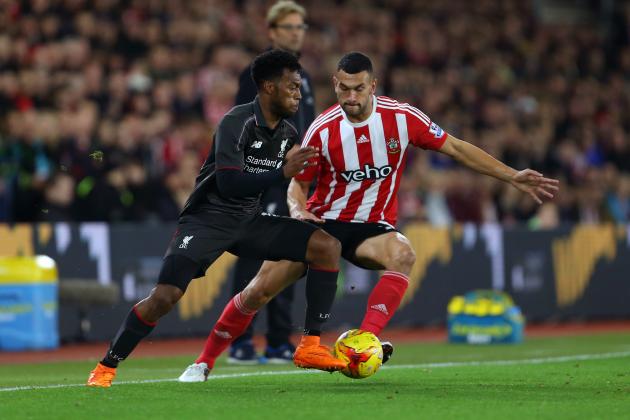
4 Potential Destinations for Daniel Sturridge If He Leaves Liverpool

West Ham United (Or Another Club Outside the Premier League's Big Guns?)

Catherine Ivill - AMA/Getty Images

As was the case in the previous slide with Tottenham Hotspur, so it is with West Ham United. Except that, in this case, the reports are even more tenuous.

Follow along for a moment. According to the Daily Mail, Sturridge prefers a move to another Premier League club—as opposed to, say, a continental European destination. Meanwhile, Cross' report at the Daily Mirror indicates that West Ham will be in the market for a striker this summer.

So, are West Ham and Sturridge currently being linked with one another? Not directly. But if you put those two together, you have the beginnings of a transfer rumor. Don't be surprised if just such a rumor pops up this spring.

Verdict: Having played for Manchester City, Chelsea and Liverpool, Sturridge might find it difficult to secure a move to another of England's big guns. A slight step down into the next tier of Premier League clubs could therefore make some sense, especially if he wants to remain in the country.

However, as of this moment, only pure speculation can link West Ham and Sturridge.


Source: 4 Potential Destinations for Daniel Sturridge If He Leaves Liverpool

Friday, February 5, 2016

Destination XL Group Inc (DXLG) Lifted to Buy at Zacks Investment Research

Destination XL Group Inc (DXLG) Lifted to Buy at Zacks Investment Research February 6th, 2016 - 0 comments - Filed Under - by Dave Maldonado Tweet  

Zacks Investment Research upgraded shares of Destination XL Group Inc (NASDAQ:DXLG) from a hold rating to a buy rating in a research report released on Tuesday morning, Market Beat.com reports. The firm currently has $5.25 target price on the stock.

According to Zacks, "Destination XL Group, Inc. is a multi-channel specialty retailer of big & tall men's apparel with operations throughout the United States, Canada and Europe. It operates under six brands: Destination XL(R), Casual Male XL, Rochester Clothing, B&T Factory Direct, ShoesXL and LivingXL. Its stores offer sportswear, dress clothing, footwear, suits, loungewear, neckwear, and accessories, basic items and lifestyle products. The Company also has electronic commerce and catalog operations. Destination XL Group, Inc., formerly known as Casual Male Retail Group Inc., is headquartered in Canton, Massachusetts. "

Shares of Destination XL Group (NASDAQ:DXLG) traded down 4.40% during trading on Tuesday, hitting $4.13. 167,039 shares of the stock traded hands. The firm's market cap is $202.85 million. The company's 50 day moving average is $4.78 and its 200 day moving average is $5.28. Destination XL Group has a 52-week low of $4.06 and a 52-week high of $6.70.

Destination XL Group (NASDAQ:DXLG) last posted its earnings results on Friday, November 20th. The company reported ($0.07) earnings per share for the quarter, beating the Thomson Reuters' consensus estimate of ($0.09) by $0.02. The business had revenue of $99.60 million for the quarter. During the same period in the prior year, the business earned ($0.08) EPS. The company's quarterly revenue was up 6.4% compared to the same quarter last year. On average, equities research analysts predict that Destination XL Group will post ($0.11) EPS for the current year.

Several other equities analysts also recently weighed in on DXLG. Brean Capital restated a buy rating on shares of Destination XL Group in a report on Monday, November 23rd. Sterne Agee CRT restated a buy rating on shares of Destination XL Group in a report on Sunday, November 22nd. Two research analysts have rated the stock with a hold rating and three have assigned a buy rating to the stock. Destination XL Group currently has an average rating of Buy and a consensus price target of $7.06.

Several large investors have recently modified their holdings of DXLG. Rhumbline Advisers increased its stake in shares of Destination XL Group by 4.8% in the fourth quarter. Rhumbline Advisers now owns 49,871 shares of the company's stock worth $275,000 after buying an additional 2,295 shares during the period. California State Teachers Retirement System increased its stake in shares of Destination XL Group by 1.7% in the fourth quarter. California State Teachers Retirement System now owns 66,537 shares of the company's stock worth $367,000 after buying an additional 1,136 shares during the period. Essex Investment Management Co. LLC purchased a new stake in shares of Destination XL Group during the fourth quarter worth approximately $733,000. Finally, Punch & Associates Investment Management Inc. increased its stake in shares of Destination XL Group by 7.1% in the fourth quarter. Punch & Associates Investment Management Inc. now owns 1,848,336 shares of the co mpany's stock worth $10,203,000 after buying an additional 121,895 shares during the period.

Destination XL Group, Inc along with its subsidiaries is a specialty retailer of big & tall men's apparel with retail and direct operations in the United States and London, England. The Company operates under the trade names of Destination XL, DXL, Casual Male XL, Casual Male XL Outlets, DXL Outlets, Rochester Clothing, ShoesXL and LivingXL.

12 Month Chart for NASDAQ:DXLG

Get a free copy of the Zacks research report on Destination XL Group (DXLG)

For more information about research offerings from Zacks Investment Research, visit Zacks.com

This story was originally published by Intercooler Financial (http://www.intercooleronline.com) and is the sole property of Intercooler Financial. If you are reading this article on another website, that means this article was illegally copied and re-published to this website in violation of U.S. and International copyright law. You can view the original version of this story at http://www.intercooleronline.com/stocks/destination-xl-group-inc-dxlg-lifted-to-buy-at-zacks-investment-research/381683/

Receive News & Ratings for Destination XL Group Inc Daily - Enter your email address below to receive a concise daily summary of the latest news and analysts' ratings for Destination XL Group Inc and related companies with MarketBeat's FREE daily email newsletter.

  Advertisement Advertisement
Source: Destination XL Group Inc (DXLG) Lifted to Buy at Zacks Investment Research

Thursday, February 4, 2016

The rain forest destination Americans are missing out on

Feet propped on a balcony rail, I'm gazing through a small vineyard lined with palms, then out over the edge of a thousand-foot sea cliff. And on the far Atlantic horizon, a sudden apparition: probing forelegs, followed by a colossal spider.

That was just optics. The spider — a small and ordinary one — had suddenly crawled out on the top rail at eye level, a few inches away. But here on the island of Madeira, west of North Africa and Europe and hundreds of miles from either, the traveler's musing question applies to both me and the spider: How did we get here?

Each of the hundreds of species of birds, plants and insects within the rich mantle of rain forest that greens Madeira is a miraculous wanderer. They have drifted in on the wind, or on floating debris, over epic spans of time and ocean, since volcanic convulsions pushed this land a mile above the surface 5 million years ago.

I got here more conventionally, looking for an easy but unfamiliar destination to explore. Madeira, though part of Portugal and only a 90-minute flight from Lisbon, qualifies. It offers some options that may sound zany — a narrated tour in a motorcycle sidecar, for example, or a slaloming ride in an upholstered toboggan, sans snow. The best reason to visit, though, was a week of inn-to-inn hiking on remote, high-elevation rain-forest paths. We carried only daypacks with lunches supplied by the inns, occasionally clambering but usually strolling, for five or six hours on each outing. Then, a long soak in a hot tub and maybe a glass — of course — of the namesake fortified wine.

There are a quarter-million permanent residents here, but Madeira is still in the process of being discovered, at least by Americans. The United States accounts for a very small fraction of tourism — most visitors are Europeans. We may figure that with the Caribbean and Hawaii closer by, another tropical island destination would be redundant. But in its venturesome recreations, history and stunning landscape, Madeira is a place quite apart. Its even climate invites travelers year-round. We had come through Madrid and its string of sweltering days in the high 90s prior to our arrival here in late July. Madeira stayed in the high 70s and occasionally low 80s.

This was among the first encounters of the agile Portuguese when their Age of Discovery gathered conquests in the 1400s. It was a rarity: a big green fertile island, completely uninhabited. By people, anyway. On the much smaller neighboring island of Porto Santo, settlers let loose a litter of rabbits to multiply, and they soon ate everything but the geology. That island became a desert that has persisted for 500 years.

Madeira's fate was gentler, though it was set on fire to clear land for farming and the southern districts burned for years. The steep, wet, lush north was spared, and its water was coveted for the drier south. But from the rugged shore up through hanging forests to a skyline of tall, barren crags, most of this island is a landscape of near-vertical rock. So slaves were suspended by ropes to etch a tracery of hundreds of miles of narrow levadas, or canals, onto cliffs and canyon walls to move the water. That often sacrificial form of labor lasted centuries.

Today, hikers are the happy beneficiaries. You can stroll along the easy gradients of the network of levadas for days at a time, much of it through a globally rare native laurel forest — a UNESCO World Heritage natural feature. The paths lead to shreds of cloud at the edge of yawning canyons, occasional tunnels, spectacular waterfalls and views out to the breakers battering distant coastal cliffs.

These narrow watercourses were "of vital importance," the British traveler W.H. Koebel wrote in 1909. "They are the arteries that nourish the land." It's true now, too: They still supply water to Funchal, the capital, for instance. That port city, a cruise ship destination during the October-to-May season, accounts for more than half of the island's population. The rest of the Madeirans inhabit a thin scatter of villages, with centuries-old churches and tiny cafes. They are blissfully free of high-rise hotels and blaring traffic.

We were ready to descend from our final day of hiking along the levadas and into Funchal. One conveyance for that part of the trip is available nowhere else on the planet that I know of: You can slide down the high, curvy, cobbled streets into town on the runners of a big wicker toboggan.

These popular rigs were invented more than a century ago for the citizens of the hilltop suburb of Monte to commute. Each is steered by two men in vintage white uniforms and boaters. They hop on for the ride down the fast, straight portions and nimbly alight to run alongside and nudge you around corners or over slower spots. We opted to come down from the mountains instead via a long, exquisite glide in a teleférico — an overhead cable car.

Another piquant way of making our way around the island, and getting to know it a bit more on our last full day, was a tour in the sidecar of a shiny blood-red motorcycle. This service is offered by a native Madeiran who is a former corporate finance officer, Filipe Freitas.

He is one of a wavelet of entrepreneurs who, with the help of loans from the European Union, are staying afloat in what the Portuguese call their crisis economy — bad enough that it is sometimes compared to that of Greece. Precariously high unemployment drives many educated Portuguese to emigrate. Visitors, however, will find that the shaky economy keeps prices low, especially out beyond the most crowded tourist destinations.

Filipe picked us up at our hotel on one of his Russian-made Ural bikes. It hauled my wife in the sidecar and me on the rear pillion seat over narrow, steep roads along the western coastline. Motorcycles may make you apprehensive, but we were comfortable through the entire four-hour ride on this stable vehicle — especially because the safety-conscious Filipe rarely broke 30 mph. Through speakers built into our helmets, he narrated the cultural and natural history of the passing panorama.

We looked out over tile-roofed homes strung along the hillsides far below, where cane, beans, corn and garden vegetables had been sown for the first time in a long while. "It's beautiful to look at, and the work and the food are probably healthy for us," he said. "But those people are doing it because they are unemployed and their families must eat, so it is not a completely carefree thing to see." An unusual number of houses along the narrow roads, most with exquisite veranda views out over the ocean, are empty and for sale. Many others are just abandoned.

Starting in the early 1930s, Portugal and Madeira endured the fascist dictator António Salazar for 36 years, and his successors persisted for a short time after he died. Salazar used secret police to enforce his grim view of the cultural values that should define national life, several guides had told us. The Portuguese still joke ruefully about "the three Fs" that Salazar preached — Fatima, futbol and fado (miracle-religion, sports and the mournful national folk music) — to distract them from their privations.

"My wife is a schoolteacher," Filipe said. "Under Salazar, she would not have been allowed to marry me unless I made more money than she did. Women, especially the few working women, had to be seen as subordinated." Part of the impetus for ending that brutally repressive, backward era were the ruinous wars that Salazar waged to try to hang on to Portugal's African colonies, Mozambique and Angola.

Exhilarated by our ride along the undulant coastal road to the 2,000-foot-high headland of Cabo Girão, we saw remnants of that national history, still vivid for the Portuguese. Some of the abandoned houses we passed, scenic ruins now, had been hideouts for young men evading conscription and the colonial wars.

In 1974, army officers led a nearly bloodless coup, freed the colonies and established the current democracy, but a chaotic period of adjustment followed. Two of Filipe's uncles, for instance, returned from Africa but soon left again, one for Boston, one for Venezuela — part of Portugal's continuing, melancholy diaspora.

We stopped at a 1950s-era venda, an all-purpose neighborhood store and gathering place that is now something like a small museum, full of the old wares, remedies and notions, with a bar. Filipe's friend Maria Jose made us tangy, locally celebrated ponchos — lemon and orange juice, honey, and rum (Filipe abstained, of course). Avoiding thoughts of our pending departure, we traded stories about our rich week of exploration on Madeira.

Learning some of its somber history had the effect of intensifying our appreciation for the beauty of the heights, the cliffs and the sea. It was good to know, after all, that Salazar is long gone and the economy on enterprising Madeira is showing signs of revival.

What to know when planning an inn-to-inn hiking ad­ven­ture in Madeira

This was our third inn-to-inn hiking trip in as many years. The tour operator supplies maps, directions, lodging, breakfast and dinner, and moves our luggage when we change hotels. Several companies offer a Madeira package. If you make this choice, be aware that the travel industry is a shape-shifting landscape. Ask who is really responsible for the local arrangements.

We planned to use a tour company that had given us good results before. We were told, though, that the Madeira trip was now offered by another U.S. packager instead. So we booked through that outfit, which is really only a pass-through marketer for a British company that has recently been sold to a German firm that in reality handed us off to a Madeira-based operator that took custody, more or less, as soon as we landed. We would have saved money just using the Madeirans to begin with.

And there were distracting glitches — nothing calamitous — that surprised us after our prior trouble-free trips. The person at the "24-hour emergency number" was on vacation, for example. There were mix-ups about the hotel bookings. The Madeiran personnel who cleared things up were uniformly genial and conscientious, and English is spoken widely.

Ask your prospective inn-to-inn hiking planner for references you can talk with by phone, people who have used the same tour operator for the same trip in the past year. You'll want to know how well the transfers were handled, the quality of the hotels and meals, and, crucially, that the point-by-point hiking instructions were perfect, or nearly so.

If you have time to do your own planning instead, several good guidebooks are available for hiking the levadas (some of them are not safe). The hotels you choose can routinely arrange for luggage to be transported to your next destination. Many of them know the trailheads and pickup locations well. Madeira has surprisingly good cellphone service, and many hotels can easily get you to and from the hikes by cab. Happy trails!

Nash is a freelance writer in Richmond.

More from Travel:

What Dominica is: Beautiful, natural. What it's not: Cluttered with resorts.

The Azores: An untamed island paradise only a few hours by air from North America

On Santorini, the indigenous tomato paste gets its own historical museum


Source: The rain forest destination Americans are missing out on

Wednesday, February 3, 2016

Could the Chinese Super League overtake MLS as the hottest football destination outside Europe?

After a string of big-money signings, the Chinese Super League (CSL) looks set to challenge Major League Soccer (MLS) as the hottest football destination outside Europe.

Guangzhou Evergrande's record-breaking $45 million signing of Jackson Martinez from Atletico Madrid is a huge statement of intent for football in China.

The 29-year-old Colombia striker joins ex-Chelsea midfielder Ramires and former Serie A duo Gervinho and Fredy Guarin as other big signings in the CSL during 2016.

Brazilian stars Robinho and Paulinho will be teammates of Martinez at Guangzhou, where he will play under former Chelsea and Brazil boss Luiz Felipe Scolari.

While MLS targets top names coming to the end of their playing days - Steven Gerrard, Andrea Pirlo and Frank Lampard are good examples - the CSL is attracting players either approaching or already in the prime of their careers.

Ricardo Goulart, 24, left Brazilian team Cruzeiro for Guangzhou as a title winner and one of the league's top goalscorers. He was recently called-up to the Brazilian national squad, despite steering away from the traditional routes when he decided to leave Brazil.

Simon Chadwick, Professor of Sports Enterprise at the UK's Salford University, says China is intent on making its mark on the world stage.

"It's a brand positioning statement. It's telling the world 'We're here and this is what we're doing,'" he said, as reported by CNN.

"In terms of China's reputation to be an important nation globally, to be good at football is a large part of that.

"China wants to build the world's biggest sport industry worth $850 billion by 2025 and part of that strategy is to host the World Cup and win it. To do that it needs to learn how to play football, so it's now acquiring and developing assets to enable this."

READ MORE: China plans to become global football powerhouse

Leading coaches like Sven Goran Eriksson, Alberto Zaccheroni and Mano Menezes have been attracted to China by the riches on offer.

The money boom in the CSL has been driven by the country's president, Xi Jinping.

A huge football fan, he was annoyed at China's failure to establish itself on the world stage and has encouraged wealthy businessmen and companies to get involved to help grow the game.

He has also backed a government scheme to get children playing football at school, which has set a target of 20,000 schools playing the sport on a weekly basis by 2017.

Read more

Chinese consortium buys 13% of Man City's parent company in $400mn deal

Chinese internet giant Alibaba has invested heavily in Guangzhou, working to create an infrastructure at the club which will make it less reliant on foreign players.

With help from Real Madrid, Guangzhou built what is thought to be the largest football academy in the world to help develop the next generation of players.

While youth development will give China solid foundations on which to build the game, a new five-year, $1.25 billion television deal will ensure clubs can keep targeting top names.

Despite China's moves to position itself as a leading power in football, which have included investment in Premier League giants Manchester City, Professor Chadwick says it still has a number of issues to address.

"Chinese football historically has had a governance problem," he said. "While corruption standards are improving, they are still not good enough.

"So anyone going to play in China has to be mindful that there may still be some problems. For example, payment of fees, be it transfer fee or wages."


Source: Could the Chinese Super League overtake MLS as the hottest football destination outside Europe?

Tuesday, February 2, 2016

Developing Relations With Iran: Europe’s Large-Scale Strategy – Analysis

By Saeed Alikhani*

Italy and France were destinations for Iranian President Hassan Rouhani's first official trips following the removal of sanctions that had been imposed on Iran over its peaceful nuclear program. During these trips, Rouhani was accompanied with a 200-member delegation, which consisted of officials at the highest political and economic levels, which clearly indicated president's approach to boosting economic relations with those countries and attracting foreign investment to Iran.

A glance at the agreements reached during these two trips will prove that major European companies are now ready to return to the Iranian market. France's Peugeot is planning to invest 400 million euros in Iran while Citroen has also agreed to produce 200,000 cars in Iran in cooperation with the country's biggest carmaker, Iran Khodro. According to experts, the contract is worth USD 436 million.

Meanwhile, the French oil major, Total, has announced that it will purchase 200,000 barrels per day of oil from Iran. At the same time, Airbus has announced its readiness to renovate Iran's air fleet by selling 118 commercial jets, including three humongous Airbus A-380 passenger plane to the Islamic Republic.

The French Prime Minister Manuel Valls has announced that the two countries will sign agreements for further cooperation in such sectors as health, agriculture, and environment. In addition, Aéroports de Paris and Bouygues industrial group will take part in the construction of a new passenger terminal at Tehran's Imam Khomeini International airport while Vinci SA has signed an agreement to manage and renovate airports in the Iranian cities of Mashhad and Isfahan.

Meanwhile, CMA CGM, France's container shipping company, has reached an agreement with Iran for cooperation in shipping and development of port terminals in the Islamic Republic. Suez Environnement SA, which as its name denotes is active in the field of environment, has signed an agreement for water treatment in Iran, while France's Sanofi has also signed a contract to sell medical products to Iran.

Iranian delegates also signed remarkable agreements with Italian sides during Rouhani's visit to Rome. The two countries have signed 14 official documents to boost cooperation in such fields as road transportation, railroad, medical and education cooperation, commerce, safety, port cooperation, agriculture, quarantine and preservation of plants, and pharmaceuticals.

What has been mentioned as economic achievements of these trips is a set of agreements, which will greatly help boost various sectors of the country's economy and in doing so, can make up for the past stagnation, which was a result of sanctions against Iran and had prevented prosperity and growth of these sectors.

Of course, this situation is not special to Iran and European sides will soon know about the advantages of close economic cooperation with Iran. Under these conditions, talking about the past and breach of promises by some countries is only an effort to create obstacles on the way of entrepreneurship or flow of millions of euros of foreign investment, and will only cast doubts on the Iranian administration's approach to develop foreign cooperation. However, the point that must not be forgotten is that although diplomacy learns lessons from the past, it sets it eyes on the future.

Whether we like it or not, we must accept the reality that Iran's achievements as well as rising soft and hard power of Iran in the region have faced our country with more difficult and more complicated equations, and regional actors involved in this new situation have defined a large part of development of their regional power through establishment of economic relations with big economies in the world.

Signing economic contracts by major European countries with Iran is not a measure to be merely assessed as an economic step and, there is no doubt that the policy of economic closeness with Iran will be extended to other areas such as politics and so forth.

The post-sanctions Europe is now offered with the opportunity to judge the issue of relations with Iran through its large-scale economic measures and by comparing the situation under "sanctions" with the "economic cooperation." Therefore, if this judgment is seasoned with smartness, Europe can even think about more extended relations with Iran as well.

*Saeed Alikhani, International Analyst

Source: Iran Newspaperhttp://iran-newspaper.com/ Translated By: Iran Review.Org

TOPICS:EconomicsEuropean UnionIranMiddle EastTrade
Source: Developing Relations With Iran: Europe's Large-Scale Strategy – Analysis

Monday, February 1, 2016

These are the top 5 career destinations for expats

European countries Switzerland, Sweden and Germany are the top destinations for people thinking of relocating and developing their career abroad, a survey from HSBC has found.

The Expat Explorer survey – which was commissioned by HSBC Expat, the global bank's offshore financial services group – asked 21,950 respondents to an online questionnaire about which countries were best for their careers, in terms of criteria such as work/life balance, job security and earnings potential.

"Europe offers the best all-round careers experience, especially for aspects such as job satisfaction," explained Dean Blackburn, Head of HSBC Expat, in a press release accompanying the survey's publication.

"Ambitious expats looking to move up the ladder will take a keen interest in Asia, while the financial rewards generally on offer in the Middle East provide an enticing prospect."

A survey last year by HSBC Expat found that Middle East countries such as Qatar, Oman and Saudi Arabia offer the best financial rewards for people thinking of living and working abroad.

Here are the top five career destinations for expats:


Source: These are the top 5 career destinations for expats